The session covered a wide range of topics — from the transformative impact of AI and utilization of data on governance practices , to global ethical standards, the strategic role of integrated thinking, integrated reporting, and board-level ownership of sustainability. Participants gained a comprehensive perspective on how the Transformational Governance approach can be holistically integrated into institutional business processes.
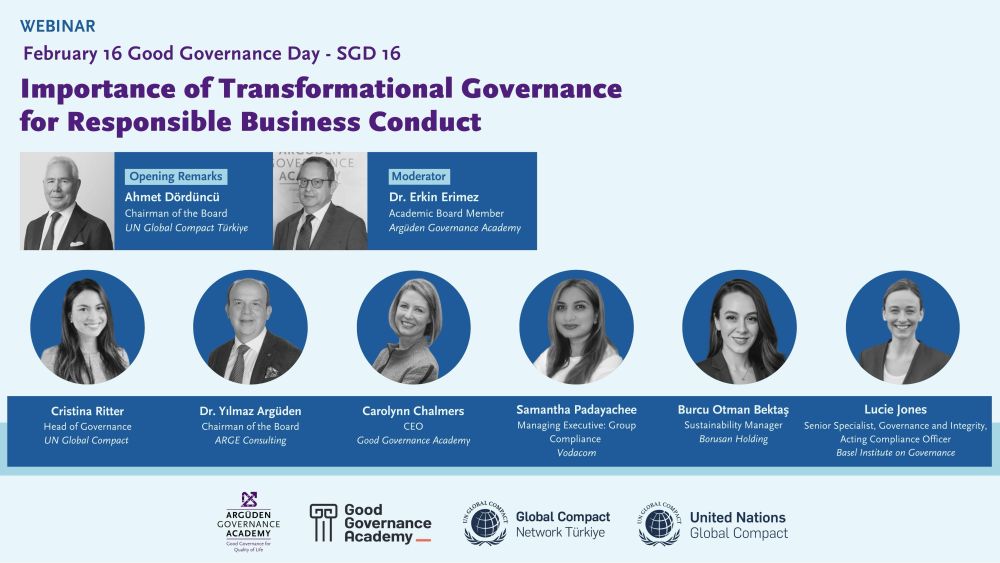
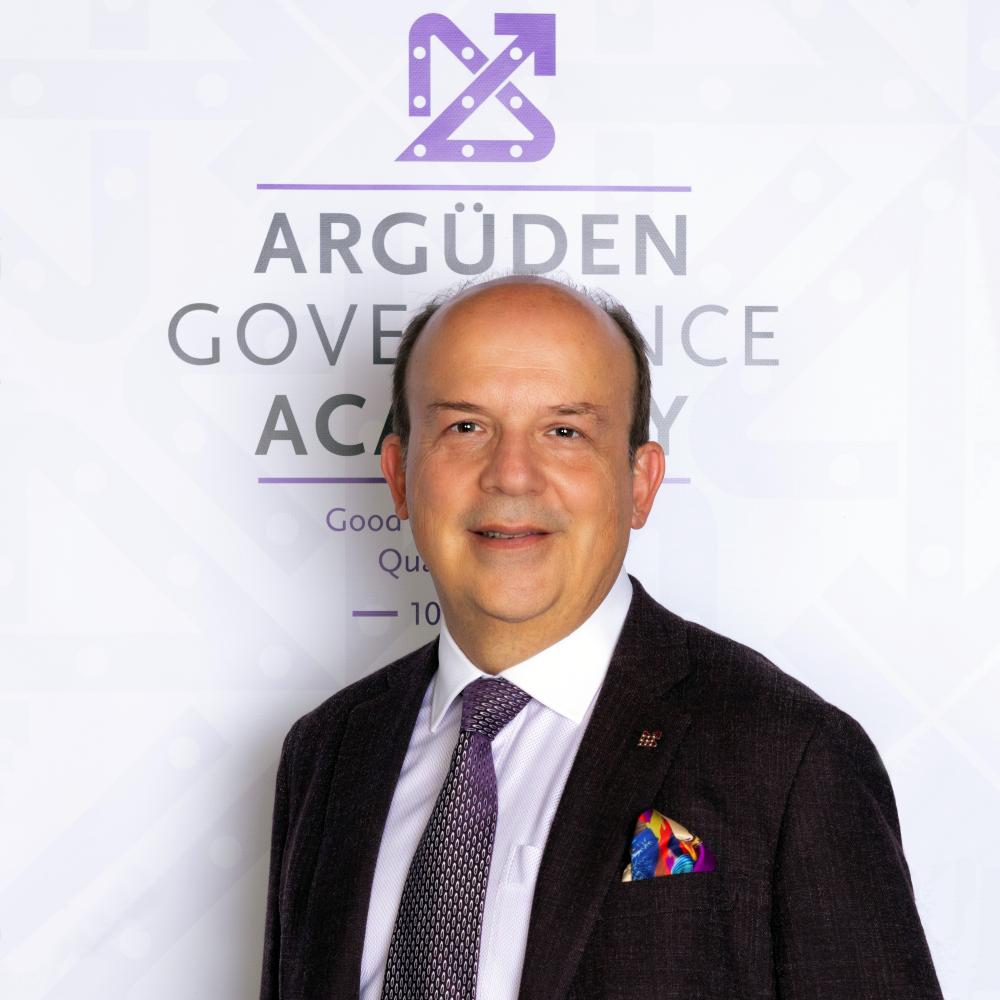
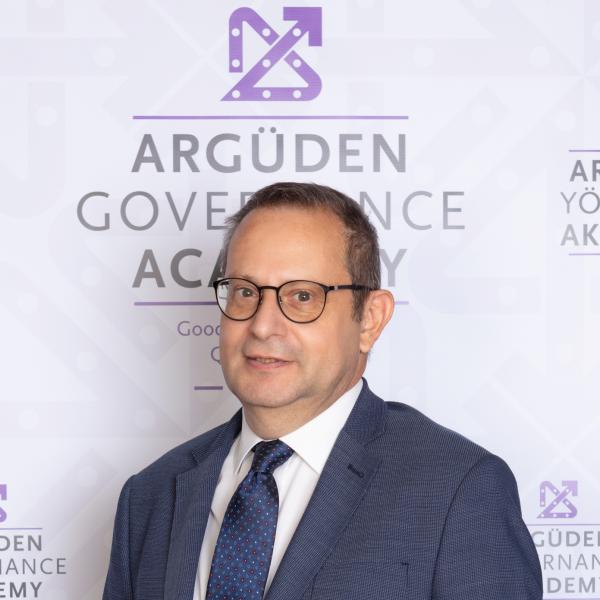
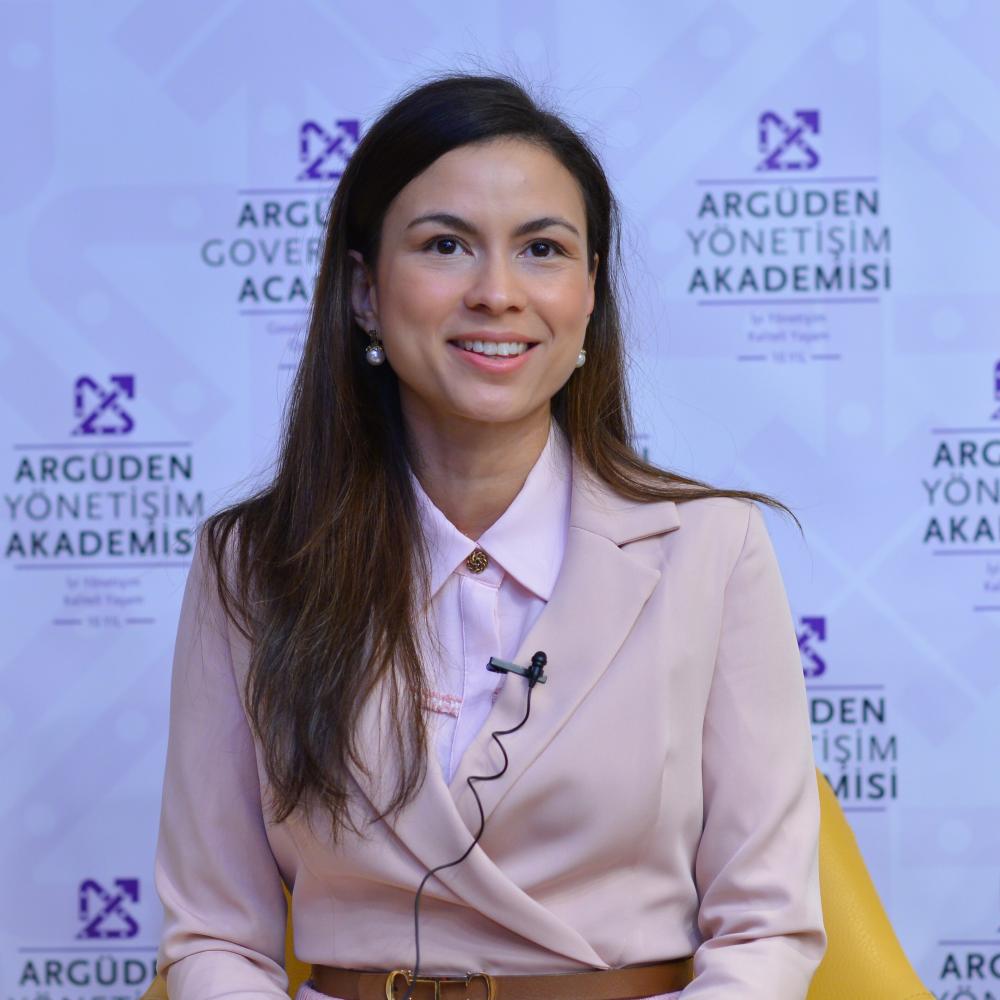
Panel has been moderated by Dr. Erkin Erimez, Academic Board Member of Argüden Governance Academy. The panelists were: Caroline Chalmers (CEO, Good Governance Academy), Cristina Ritter (Head of Governance, UN Global Compact), Dr. Yılmaz Argüden (Chairman, ARGE Consulting), Lucie Jones (Senior Governance and Ethics Expert, Basel Institute on Governance), Samantha Padayachee (Executive Director of Compliance, Vodacom Group), and Burcu Otman Bektaş (Sustainability Manager, Borusan Holding).
Key Messages
Caroline Chalmers – CEO, Good Governance Academy
"Integrated reporting is not merely a reporting framework — it is a strategic governance tool that holistically communicates an institution's long-term value creation journey. The report combines financial and sustainability performance in a single value narrative, enabling boards to consistently share their strategic oversight, decision-making approach, and value creation story with stakeholders. This approach strengthens the board's oversight role by making critical elements like purpose, strategy, and risk and opportunity management transparent. Today the focus is not 'how much profit was made' but 'how value is created.' Integrated reporting addresses growing global expectations for transparency and accountability while clearly presenting an institution's long-term value creation architecture."
ISSB (International Sustainability Standards Board) standards provides a financial data infrastructure that supports integrated thinking and reporting, helping to quantify impacts in monetary terms — particularly aiding investor decision-making. Integrated reporting is a broad report that provides data-driven information across all dimensions (governance, economic, environmental, and social) of an institution's short-, medium-, and long-term value creation journey, while also conveying performance information.
Cristina Ritter – Head of Governance, UN Global Compact
"Transformational governance is an approach that prioritizes ethical leadership, inclusion of sustainability criteria into decision making, dealing with corruption, transparency, human rights, equality and inclusion, and enables sustainable impact. It redefines board responsibilities: ethics, transparency, and stakeholder focus which must be considered in decision-making processes. Institutions can only create long-term value through holistic and forward-looking governance mindset to tackle with complex global challenges. Today, institutions success are not measured by financial success, but by how they fulfill their responsibilities to the society, the environment, and all their stakeholders. Transformational governance provides institutions with a strategic compass in the face of these expanding expectations. Transparent oversight mechanisms, strong ethical standards, and accountable leadership enable institutions to build trust and create sustainable impact."
Cristina Ritter also shared information about the "Anti-Corruption, Ethics and Compliance Program Guide for Business," and stated that the guide will be launched in early March. Originally published by the United Nations, this guide was comprehensively revised through a Think Lab process involving 26 companies from different regions of the world — including ARGE Consulting — in response to evolving needs. The guide offers recommendations for operating in accordance with ethical principles, strengthening a culture of compliance, and increasing anti-corruption capacity. It emphasizes that transformational governance forms the foundation of an ethical work culture and effective anti-corruption efforts, focusing on areas such as internal policy development, process design, strengthening internal audit mechanisms, promoting ethical behavior, whistleblower protection, transparent reporting, collective action, and the use of new technologies like AI in anti-corruption efforts.
Dr. Yılmaz Argüden – Chairman, ARGE Consulting
"AI carries significant transformation potential in the governance domain. It strengthens boards' oversight, guidance, and decision support processes — enabling more holistic risk assessment through big data analytics, effective monitoring of internal control mechanisms, and greater strategic alignment between the board and the company. However, the critical point is that: AI should not replace human judgment; it should be positioned as a powerful tool that deepens strategic evaluation. When used correctly, AI is a valuable enabler that saves time, support decision making quality, increases engagement, and improves oversight quality.
We must move beyond the narrow framework of traditional ESG reporting. For institutions to effectively manage their real impacts, governance must be placed at the center of decision-making. The G(EES) — Governance of Environment, Economic, Social — approach not only provides a more comprehensive perspective but constitutes a prerequisite for lasting, sustainable value creation. This approach supports: to evaluate all dimensions of impact in holistic manner, to consider stakeholder expectations, and to build a sustainable institutions. A beneficial outcome can be achieved by placing governance at the center of the system."
Lucie Jones – Senior Governance and Ethics Expert, Basel Institute on Governance
"The most critical element in tackling corruption is effective board oversight. Weak oversight and inadequate internal control mechanisms make institutions vulnerable to ethical violations. On the other hand strong leadership and good governance increase transparency, narrow opportunities for corruption, and institutionalize accountability. Good governance practices reduce risks, strengthens the institution's reputation, resilience, and long-term value creation capability. Good governance is a system that doesn’t hide misconduct but it helps to identify and manage risks at early stages.
Collective action is an indispensable strategic component of tackling with corruption. It is not easy for institutions to deal with corruption alone. When institutions come together to form collective structures, they could create a powerful alliance against corruption. İt is a fact that if increasing number of institutions are fighting for reducing corruption that could improve the likelihood of success. Collective action good practices are becoming widespread around the world."
Samantha Padayachee – Executive Director of Compliance, Vodacom Group
"Good governance enables early detection of risks, strengthens transparency, and protects institutions against financial losses. It not only reduces risks — it also supports long-term investments, strengthens performance measurement, increases efficiency and effectiveness, and supports sustainable value creation. Good governance creates an effective working environment within the institution and enables the development of collective solutions which helps early detection and prevention of risks. Good governance practices enables agile management. Because good governance strengthens internal decision-making processes through participatory and collective decision making. Good Governance positively affects institutional performance.
AI creates a critical leverage effect within the institutional ecosystem. By strengthening oversight mechanisms, it makes risks visible at an early stage and makes compliance processes more effective. However, the key point to be underlined is that AI is not a solution by itself. Real value emerges when technology is positioned alongside a strong governance framework, and accountability mechanisms. But ethic in AI governance is key for successful outcomes."
Burcu Otman Bektaş – Sustainability Manager, Borusan Holding
"Sustainability is not merely an operational task — it is a strategic responsibility at the heart of governance. Real transformation starts at the board level, where the direction of the company is set and a culture of accountability is formed. Long-term value can be created with ownership of sustainability approach by the board. Institutional resilience can be achieved by: strengthening monitoring and audit mechanisms, closely following technological transformation, evaluating regulatory changes through a strategic perspective, and addressing sustainability risks within a holistic framework.
Internal audit plays an important supporting role in strengthening sustainability practices and reporting. It contributes to the effective operation of sustainability-related processes and provides a guiding framework for collecting data accurately, consistently, and reliably. In this context, internal audit is positioned not merely as an auditor, but as a strategic business partner that provides advisory services to the institution."
Good governance shapes not only the present, but the future of our societies. A more equitable, trustworthy, and sustainable tomorrow is only possible through collective action.
We extend our sincere gratitude to all stakeholders, speakers, and participants who contributed to this shared endeavor on Good Governance Day, February 16.
Related People